
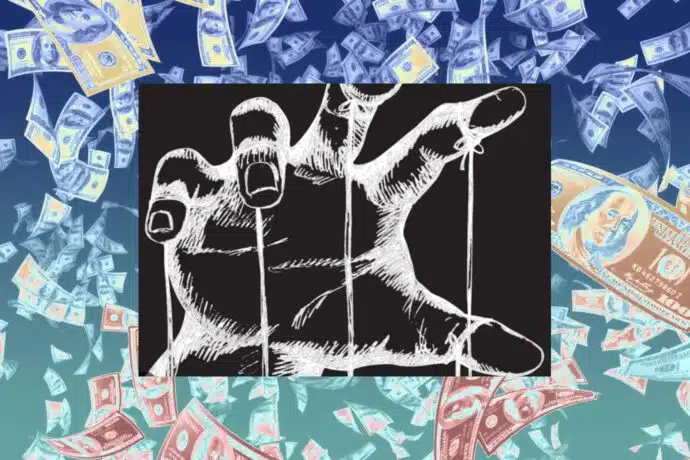
The flow of “dark money” into British politics is a real and present danger. Regulatory gaps provide a cloak of secrecy through which foreign and malign interests can seek to influence our elections and government.
Following the Rycroft report in March 2026, the Government moved immediately to ban crypto donations and to cap the amount voters living overseas can give to political parties and candidates. It’s a good start but has more to do with clipping the wings of the Reform Party than dealing with the root causes of our devalued system of political funding.
Until the 21st century, political parties in the UK were not legally recognised in electoral law, and there was no requirement to disclose donations. Then, in 2001, the first disclosure requirements on party donations came into force. But this had the effect of increasing the use of loopholes to obscure the identity of donors. For example, unincorporated associations – groups with no legal entity or requirement to disclose their funders – have donated huge sums to political parties and MPs. Companies are also used to enable foreign money to flow into British politics, even if the company has no clear record of doing business in the UK.
The investigative journal Democracy for Sale reports: “According to Electoral Commission data in the twelve months leading up to Keir Starmer’s 2024 election victory, companies gave £42 million to political parties and politicians. That is almost double the previous record of £21.5 million ahead of Boris Johnson’s 2019 win, and three times the £14 million donated before the 2017 election.
“But this surge in ‘corporate’ money is not a story about big business backing political parties. Almost none of the funding came from Britain’s major listed companies or FTSE 500 firms. Instead, it was driven by companies controlled by super-wealthy individuals, small and opaque firms that file minimal financial information, and businesses ultimately owned by foreign nationals who could not legally donate in their own name.”
There are also indirect ways of ‘funding’ campaigning that evade scrutiny. For example, think tanks supported by anonymous offshore and corporate interests are significant influencers; and during the Brexit campaign, large sums were spent on social media campaigns by organisations with no publicly available funding information.
And why, you may ask, should Reform have what amounts to its own TV station where annual losses of some £100 million are underwritten by wealthy businessmen, and the party’s leader, Nigel Farage, is paid £300,000 a year for promoting himself in the guise of a TV presenter?
In 2022, the Conservatives neutered the Electoral Commission by limiting its powers to investigate funding irregularities and curtailing its independence, a move branded “extremely dangerous” by the chair of the Committee on Standards in Public Life.
How much further will Labour now go in redressing the balance? We have been here before. In 2006, Labour ordered a review of political party financing and donations. The report was astute and far-sighted, with important recommendations. It was never seen again.
If as a nation we are serious about protecting democracy, there has to be a cap on the size of donations from any source to political parties and far greater transparency on the origin of funds.
The UK arm of Transparency International has called on the government to:
• Protect democracy by removing the corrosive influence of big money in politics: place a meaningful cap on donations; reduce campaign spending limits; increase transparency over the source of funds entering politics; and strengthen the Electoral Commission.
• Deliver open government: extend transparency requirements to all lobbyists, and require more detail about these interactions, including the form and date of communications, what the lobbyists are trying to influence, and specific ministers/officials targeted, as is the case in countries like Canada, Germany, and the US.
• End cronyism and corruption in Parliament: end corruption-prone practices that bring our legislature into disrepute, including MPs holding second jobs, and reforming the process for making appointments to the Lords and removing those found engaged in serious misconduct.